A driver looking down for a few seconds can change the course of a crash. After a collision, however, proving that distraction caused the impact usually requires more than a suspicion that someone was using a phone. Photos, witness accounts, dashcam footage, nearby cameras, police information, electronic records, and the driver’s own statements may each provide part of the picture.
If you are researching how to prove distracted driving in a Minnesota car accident, preserving evidence early can be important. Some video systems overwrite footage, physical conditions change, and memories become less precise. Martin Montilino helps Minneapolis-area injury clients understand which facts may matter and how different evidence can fit together. This guide explains what to preserve immediately, how phone and vehicle data may be obtained, and why a citation alone may not resolve responsibility.
What Evidence Can Prove Distracted Driving in a Minneapolis Crash?
Distracted driving can involve texting, a phone call, app activity, eating, adjusting navigation, reaching for an object, or looking away for another reason. The key question is generally not whether a driver owned or carried a phone, but whether the driver was distracted at a relevant time and whether that distraction contributed to the crash.
Preserve the scene and people’s observations
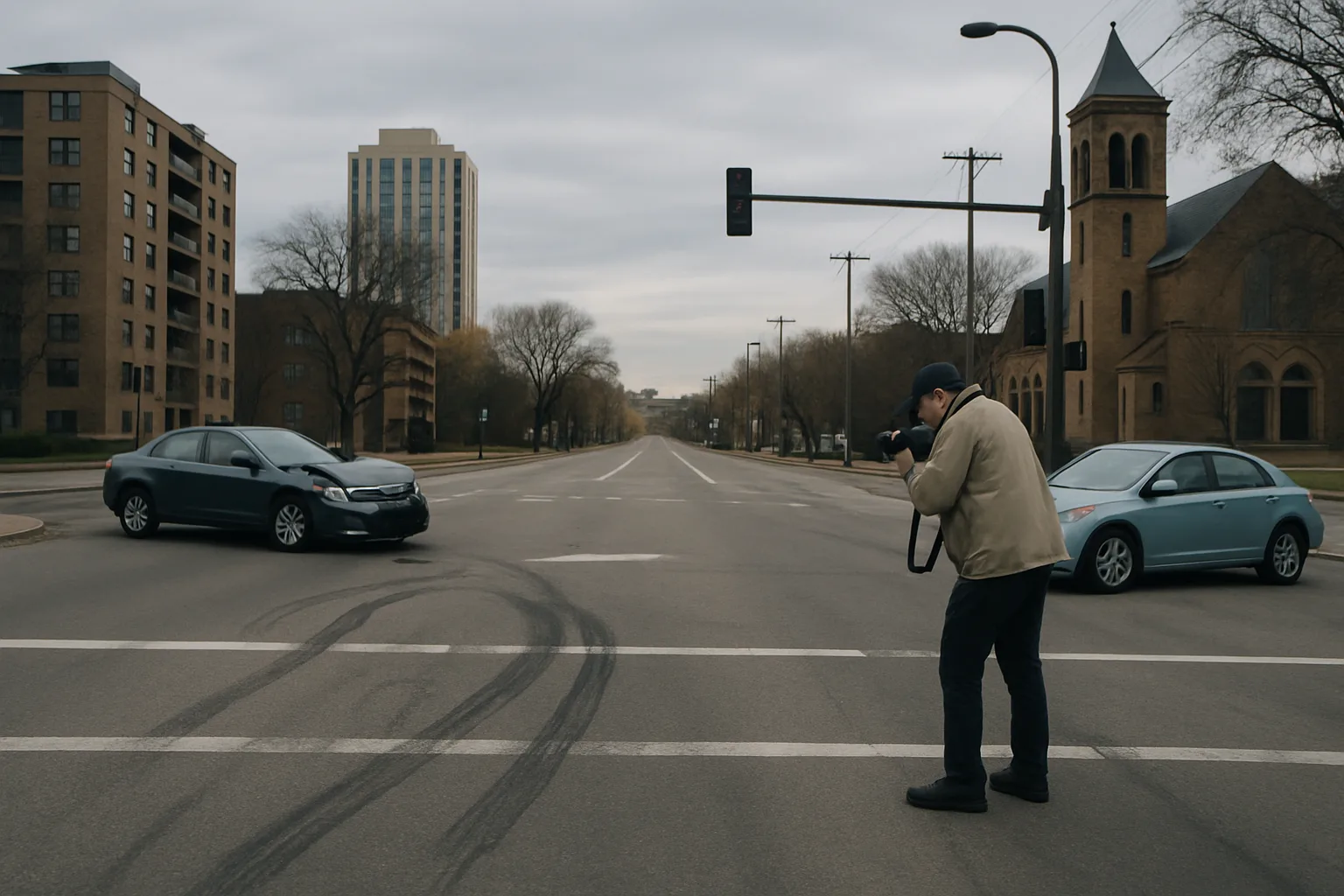
If it is safe and practical, photographs may document vehicle positions, damage, skid marks, debris, traffic signals, visibility, and roadway conditions. Take wide and close views without moving vehicles or evidence. Save original files and note when and where they were taken.
Witness details can be equally important. Record names and contact information, what each person personally saw or heard, and where the witness was located. Avoid coaching witnesses or asking them to guess whether the other driver was texting. A neutral observation—such as seeing a driver looking down immediately before impact—may be more useful than a conclusion about fault.
In Minneapolis, information from a responding officer and the Minneapolis Police Department crash report may also help identify witnesses, statements, citations, diagrams, and initial observations. A report is important evidence, but it may not include everything later discovered.
How Phone, Camera, and Vehicle Records May Support a Claim
Digital evidence can help establish timing, but it is often technical and may require consent, formal requests, or legal process. A cell phone records car accident claim may involve call logs, text-message timing, data sessions, or other carrier records. Those records may show activity near the crash, but they do not always prove who was holding the phone, what the person was doing, or whether the activity caused the collision.
Potential sources include:
- A driver’s voluntary disclosure of phone or app activity.
- Phone records obtained through an appropriate legal process.
- Dashcam footage from a vehicle involved in the crash or a witness’s vehicle.
- Security video from nearby businesses, homes, parking facilities, or traffic-monitoring systems.
- Public social-media posts showing conduct or timing relevant to the incident.
- Vehicle infotainment, navigation, telematics, or event data that may help reconstruct speed, braking, steering, or other conditions.
Camera footage should be requested quickly because many systems automatically overwrite older recordings. A person who has a dashcam should preserve the original file, including any surrounding footage and metadata, rather than editing or repeatedly saving over the storage card.
Minnesota law governs how evidence is requested and used in a Minnesota claim, and procedures may differ in Minneapolis and Hennepin County matters. A lawyer may assess whether a particular record is relevant, authentic, legally obtainable, and sufficiently connected to the crash.
How to Evaluate Distraction Evidence and Avoid Common Mistakes
Evidence is strongest when multiple sources tell a consistent story. For example, a witness may report that a driver was looking down, a nearby camera may show the driver’s posture, and vehicle or phone records may help establish timing. Crash reconstruction may then examine angles, stopping distance, lane position, reaction time, roadway design, and vehicle damage. Reconstruction should be based on available facts, not speculation.
A citation for texting or another traffic offense can be relevant, but it does not automatically decide a civil injury claim. Conversely, the absence of a citation does not necessarily mean distraction did not occur. Officers may arrive after phones have been moved, witnesses may leave, or the available evidence may be incomplete.
Steps that may help preserve information
- Keep photographs, videos, medical and repair records, and communications in their original form when possible.
- Write down your recollection promptly, including what you noticed about the other driver, traffic, lighting, and road conditions.
- Give investigators accurate information and identify witnesses without exaggerating what anyone observed.
- Avoid deleting relevant posts, messages, photographs, or location information from your own accounts.
- Do not log into, guess passwords for, or otherwise access another person’s private account or device. Public information may still need to be preserved and authenticated appropriately.
- Avoid posting speculation about the crash or confronting the other driver about possible phone use.
An attorney evaluating Minneapolis distracted driving evidence may also consider comparative fault issues, insurance materials, medical documentation, and whether additional investigation is warranted. Evidence should be handled lawfully and carefully so its reliability is not undermined.
Frequently Asked Questions
Can a police citation prove distracted driving in a Minnesota crash?
A citation may support an argument that a driver violated a traffic rule, but it is not necessarily conclusive proof of civil liability. The citation, officer’s observations, witness accounts, photographs, video, and other records may be evaluated together. The effect of a citation can depend on the facts and the legal issues involved. Minnesota rules and procedures may change, so a licensed attorney can explain how they may apply in a particular case.
Can I obtain the other driver’s cell phone records after a Minneapolis collision?
Possibly, but access is not automatic. Phone records may be available through voluntary cooperation, an insurer’s investigation, formal discovery, subpoena, or another lawful process, depending on the situation. Carrier records may show communications or data activity without proving who used the device or what caused the crash. Do not attempt to access the other driver’s private phone or accounts yourself.
What if a nearby business has surveillance video of the crash?
Ask the business or property owner whether footage exists and provide the approximate time and location. Many systems retain recordings for limited periods, and staff may not know which camera covers the roadway. Do not trespass or interfere with equipment. An attorney or authorized investigator may be able to make a preservation request and address authentication if the footage becomes part of a claim.
Can social-media posts establish that a driver was distracted?
A public post, photograph, or video may provide useful timing or context, but it must be interpreted carefully. A post may have been created earlier, scheduled, uploaded by someone else, or viewed without being created by the driver. Save the public page lawfully and preserve its URL and date information when possible. Never use deception or unauthorized access to obtain private social-media content.
How Martin Montilino Can Help
Martin Montilino is dedicated to helping Minneapolis car accident and personal injury clients understand the evidence that may support their claims. The firm can evaluate photographs, witness information, police materials, available video, electronic records, and the relationship between the alleged distraction and the collision. Depending on the circumstances, an attorney may also help identify evidence that needs prompt preservation and explain communications with insurers.
The firm is committed to fighting for clients’ rights while presenting evidence accurately and responsibly. Contact Martin Montilino for a free consultation or case evaluation to discuss what happened and explore your legal options.
The information in this article is for educational purposes only and does not constitute legal advice. Contact a qualified attorney licensed in Minneapolis, mn for advice specific to your situation.