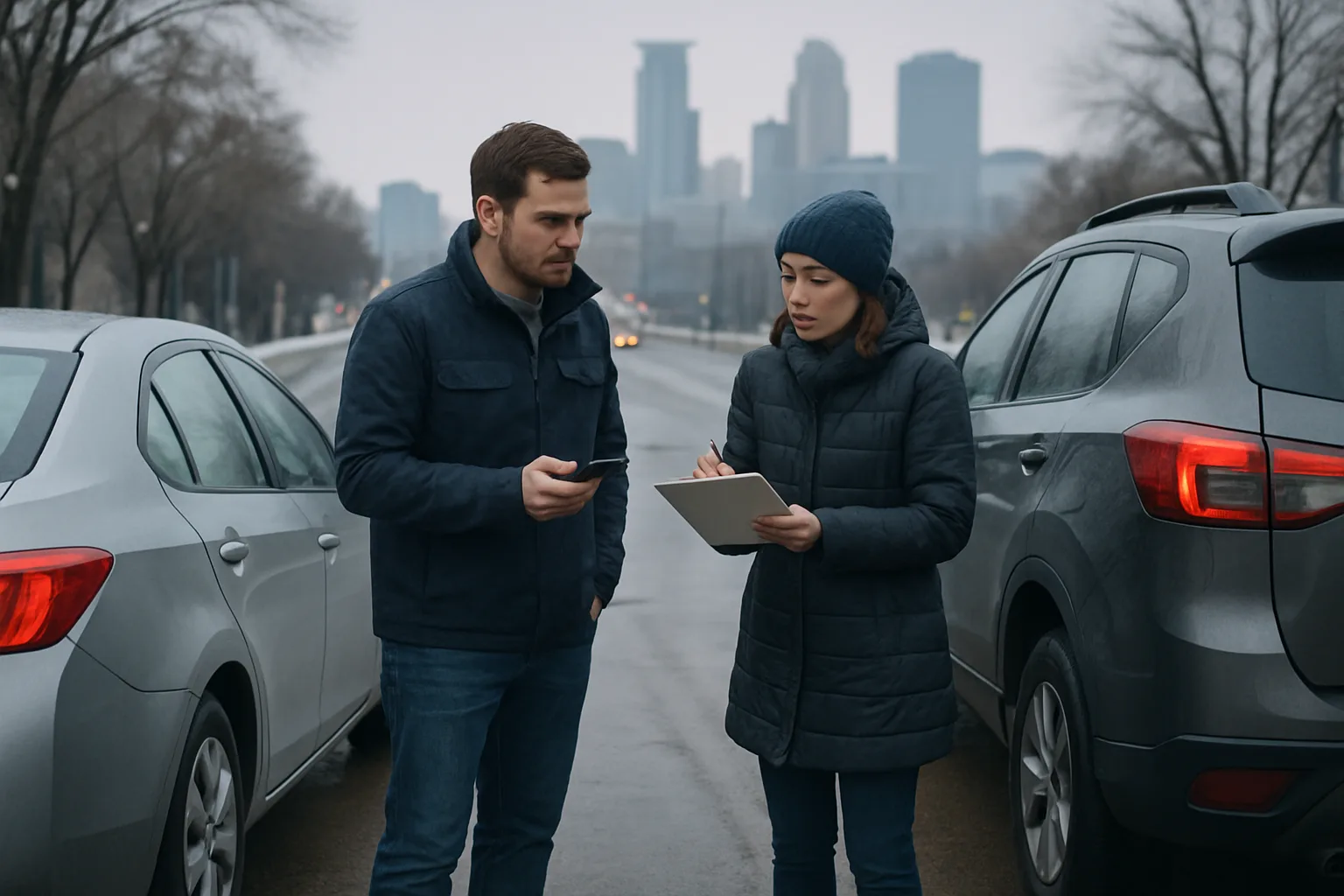
A driver stops for traffic on a busy Minneapolis street. The vehicle behind cannot stop in time and strikes the rear bumper. In many crashes, the following driver’s speed, distance, or attention becomes the central issue. But is the rear driver always at fault in a Minnesota rear-end crash? No. Rear-driver fault is common, but it is not an automatic conclusion in every case. As examples of when the front vehicle may be at fault in a rear-end crash show, liability depends on what each driver did and whether the available evidence supports the competing accounts. Martin Montilino helps Minnesota readers understand how those details can affect a personal injury claim. This article explains when fault may be disputed, what evidence can preserve the facts, how insurance may respond, and when legal guidance may be useful.
Is the Rear Driver Always at Fault in a Minnesota Rear-End Crash?
Minnesota drivers generally have a duty to operate at a reasonable speed, maintain control, and leave enough distance to respond to traffic. Those principles often place attention on the rear driver when one vehicle strikes another from behind. A police report, photographs, vehicle damage, statements, and roadway conditions may all help determine whether the rear driver failed to stop safely.
That does not mean the lead driver is automatically free from responsibility. Minnesota uses comparative-fault principles, so more than one person’s conduct may be considered when the evidence shows that both drivers contributed to the collision. The exact effect of any assigned fault depends on the facts and the applicable Minnesota law.
Situations that may complicate fault
Examples that may require closer investigation include:
- A lead vehicle makes an abrupt stop without a clear traffic-related reason, where the circumstances support that account.
- A vehicle changes lanes immediately before braking, leaving the following driver little time to react.
- A driver reverses or moves unexpectedly in a travel lane.
- A chain-reaction crash involves several vehicles, making it unclear which impact caused particular damage or injuries.
- Poor lighting, ice, heavy traffic, construction, or a blocked sightline affects what either driver could reasonably see.
An unexpected stop alone does not automatically establish fault by the front driver. A driver may have a valid reason to stop, such as traffic, a pedestrian, an obstruction, or an emergency. The question is usually how the surrounding facts fit together.

What Facts and Evidence Can Change a Minnesota Rear-End Accident Fault Analysis?
Fault disputes often turn on evidence collected before vehicles are moved, recordings are overwritten, or memories become less precise. In Minneapolis and elsewhere in Minnesota, the same basic collision can look different depending on the available proof.
A practical rear-end crash evidence checklist
Depending on the circumstances, consider preserving or documenting:
- Dashcam and surveillance footage. Save the original file promptly and keep a backup. Check whether nearby homes, businesses, buses, or intersections may have recorded the crash. Some systems automatically overwrite older footage.
- Photographs and video. Capture vehicle positions, lane markings, traffic controls, weather, lighting, road conditions, and the surrounding approach. Take close and wider images of damage without altering the vehicles before documentation when it is safe and practical.
- Vehicle damage and debris. Damage patterns, paint transfer, broken parts, and debris locations may help show the sequence of impacts. Repair estimates and inspection records can also preserve information about the vehicles’ condition.
- Witness information. Obtain names and reliable contact information for people who saw the traffic movement or heard statements immediately after the crash. Do not pressure anyone to adopt a particular version of events.
- Statements and records. Keep insurance communications, photographs, medical records, wage-loss documentation, towing information, and the crash report together. Avoid guessing about speed, distances, or fault when describing what happened.
Minnesota law and insurance policies can affect how this evidence is used. A lawyer reviewing a potential claim may examine whether the proof supports the initial account, identifies additional involved drivers, or reveals a dispute about where each vehicle was located.
What Happens After Rear-End Fault Is Disputed in Minnesota?
A rear-end collision may involve several separate questions: who caused the crash, which injuries or losses are related to it, what insurance coverage applies, and whether another driver or insurer disputes the claim. The process is not necessarily resolved by the police report alone. Insurers may conduct their own investigation, and the parties may exchange records or discuss settlement before a lawsuit is considered.
Readers can review how Minnesota car accident claims move from insurance to settlement for broader procedural context. Generally, useful steps may include:
- Reporting the collision and providing required information to the appropriate authorities and insurers.
- Preserving physical and digital evidence before it disappears.
- Following medical providers’ instructions and retaining records, without assuming that an early assessment captures every later issue.
- Tracking time missed from work and other documented financial losses.
- Reviewing all potentially applicable coverage, including the parties’ liability policies.
Minnesota’s no-fault system may provide certain benefits for medical expenses and lost income regardless of who caused the crash. Those benefits are distinct from a liability claim against another driver. Minnesota no-fault benefits for medical bills and lost wages explains that coverage in more detail.
Common mistakes that can weaken a fact record
People sometimes delete dashcam clips, post speculation about the crash, discard damaged parts, or give a recorded statement before understanding the questions being asked. Others assume a rear-end impact makes further investigation unnecessary. Depending on the circumstances, an attorney may help preserve evidence, assess comparative fault, communicate with insurers, and evaluate whether the available proof supports a claim.
Damages are also fact-specific. Medical documentation, lasting impairment, work-related losses, comparative fault, available insurance, and the quality of the crash evidence may all affect evaluation. For additional context, see how injury severity and insurance limits can affect a rear-end settlement. No example or general description can predict the value of an individual Minnesota case.
Frequently Asked Questions
Can a front driver share fault for a rear-end accident in Minnesota?
Yes, depending on the evidence. A front driver’s sudden maneuver, unsafe lane change, unexpected reverse movement, or other conduct may be relevant to comparative fault. However, a sudden stop is not automatically improper; traffic, a hazard, or an emergency may provide a reasonable explanation. Investigators may consider vehicle positions, recordings, witness accounts, road conditions, and damage patterns before assigning responsibility.
What should I do if the other driver says I caused the crash?
Avoid arguing at the scene and focus on exchanging required information, obtaining medical attention when appropriate, and preserving objective evidence. Take photographs, identify witnesses, save recordings, and provide insurers with accurate facts without guessing. Because statements and coverage issues can affect a claim, a Minnesota attorney may explain the potential implications of communications based on the specific circumstances.
Can a police report decide who is at fault?
A police report can be important evidence, but it may not answer every liability question. The responding officer may not have seen the collision, and the report may rely on statements made before all evidence is available. Insurers, attorneys, or a court may consider the report along with photographs, video, witness testimony, vehicle damage, roadway conditions, and other records.
Does Minnesota no-fault insurance depend on proving the other driver caused the crash?
Certain Minnesota no-fault benefits may be available without first proving that another driver caused the collision. These benefits can involve eligible medical expenses and wage losses, subject to policy terms and legal requirements. They are separate from a claim seeking additional compensation from an allegedly responsible driver. Coverage questions can depend on the people involved, the policies, and the facts of the crash.
How Martin Montilino Can Help
Martin Montilino is dedicated to helping injured people understand the legal and insurance issues that can follow a Minnesota rear-end crash. The firm can review the collision history, available photographs and recordings, vehicle damage, witness information, insurance communications, and documented losses. When fault is disputed, the team is committed to fighting for clients’ rights while recognizing that each case depends on its evidence, coverage, and applicable law. If you were hurt in Minneapolis or elsewhere in Minnesota, contact Martin Montilino for a free consultation or case evaluation to discuss your situation and explore your legal options.
The information in this article is for educational purposes only and does not constitute legal advice. Contact a qualified attorney licensed in Minnesota; Minneapolis for advice specific to your situation.