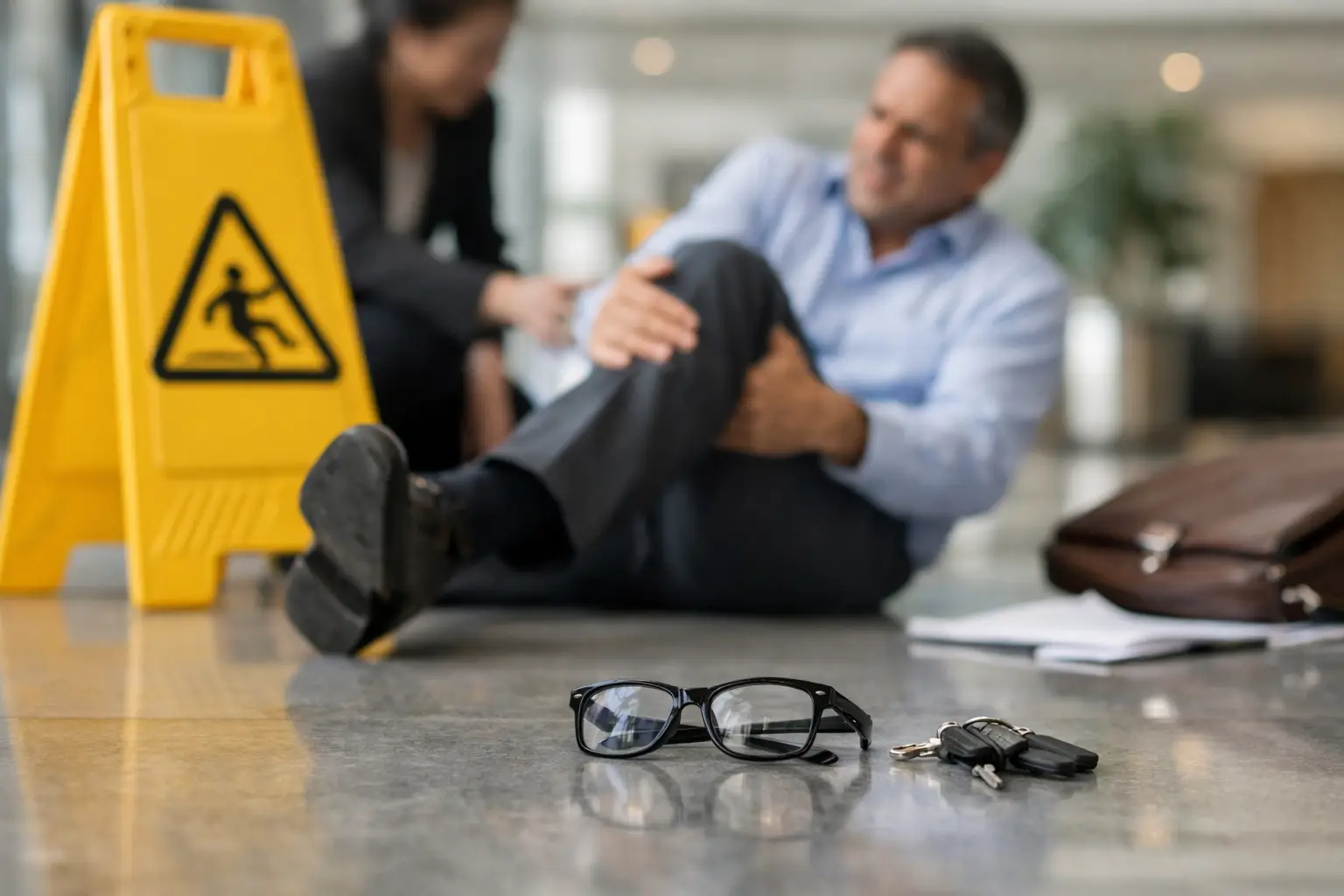
A slip on a wet grocery-store floor can leave someone with more than a bruised knee. A fractured wrist, back injury, concussion, surgery, missed work, and mounting medical bills can follow in seconds. This slip and fall lawsuit example shows how a claim may be evaluated in Minnesota and why the condition that caused the fall is only part of the case.
A property owner is not automatically responsible every time someone falls. The central question is usually whether the owner or business failed to take reasonable steps to find, fix, or warn about a dangerous condition. Strong evidence can make the difference between a denied insurance claim and a case worth pursuing.
A Slip and Fall Lawsuit Example in a Minneapolis Store
Assume a customer enters a Minneapolis grocery store on a winter afternoon. Near the produce department, an employee has placed a display of bagged ice. One of the bags has been leaking, leaving a growing puddle on the tile floor. There is no warning cone, mat, or sign.
The customer turns into the aisle, slips on the water, and falls hard. An ambulance takes her to the hospital, where doctors diagnose a broken hip. She later needs surgery, physical therapy, and several months away from her job.
At first, the store’s insurer may argue that the customer simply did not watch where she was going. That is a common response. But a careful investigation could reveal facts that change the analysis: a store employee walked past the puddle before the fall, surveillance footage shows the water was present for 35 minutes, and the store’s inspection log has a blank entry for that period.
Those facts may support a claim that the store had actual notice of the hazard, or at least constructive notice. Actual notice means someone connected to the business knew about the dangerous condition. Constructive notice means the condition existed long enough that reasonable inspection and maintenance should have uncovered it.
The injured customer would still need to prove that the puddle caused the fall and that her injuries and financial losses resulted from it. Medical records, witness accounts, photographs, incident reports, and video can all become important.
What Must Be Proven in a Slip and Fall Case?
Most premises liability claims rest on negligence. In plain language, the injured person generally needs evidence that the property owner, tenant, manager, or business had a duty to maintain reasonably safe premises, failed to meet that duty, and caused compensable harm.
The facts matter. A freshly spilled drink in a crowded store may not create liability if staff had no reasonable opportunity to discover it. A recurring roof leak that leaves water on the same hallway floor every time it rains is a different situation. A landlord who knew a stairway light was out, or a restaurant that ignored icy entry steps for hours, may face stronger evidence of fault.
There are several questions an attorney will examine early:
- What exactly caused the fall: water, ice, broken flooring, poor lighting, debris, an uneven sidewalk, or another hazard?
- Who controlled the area where it happened?
- How long had the condition been present, and was anyone warned about it before the incident?
- Did the owner have inspection, cleaning, snow-removal, or maintenance procedures, and were they followed?
- What evidence documents the injury, treatment, wage loss, and lasting effect on daily life?
A property owner may argue the condition was open and obvious. That defense can matter, but it is not always the end of a claim. People reasonably look at shelves, signage, merchandise, other customers, or where they are walking in a crowded setting. Whether a danger was obvious depends on the specific conditions, not a simple label applied by an insurer.
Evidence Often Decides the Case
After a fall, a dangerous condition may be cleaned up within minutes. Security footage may be recorded over within days or weeks. That is why prompt action matters.
If your injuries allow, report the incident before leaving the property. Ask that an incident report be completed, but do not assume the report will tell the full story. Take photographs of the hazard, surrounding area, lighting, warning signs, footwear, and visible injuries. Get names and contact information for witnesses. Keep the shoes and clothing worn at the time of the fall in the same condition, especially if their condition could later become an issue.
Medical care is also evidence. Follow through with recommended treatment and explain all symptoms to your providers. A gap in treatment does not automatically defeat a claim, but insurers often use it to question whether the fall caused the injury or how serious it is.
In more serious cases, an attorney may send a preservation request seeking surveillance video, inspection records, cleaning logs, maintenance records, and communications about the hazard. These materials can show whether the business had notice, whether employees followed policy, and whether the version of events offered later matches what happened.
How Comparative Fault Can Affect Recovery
Minnesota follows a comparative fault system. An injured person may still have a claim even if they were partly responsible, but any recovery can be reduced by their percentage of fault. Generally, a person who is more than 50 percent at fault cannot recover damages from the other party.
Return to the grocery-store example. Suppose the evidence shows the customer was looking at her phone as she entered the aisle, while the store failed to address a puddle that had been present for more than half an hour. A jury could assign some fault to the customer and some to the store. If the customer were found 20 percent at fault, a $100,000 damage award could be reduced by 20 percent.
Insurance companies frequently raise comparative fault early. They may focus on footwear, distractions, weather, prior medical conditions, or whether the injured person saw a warning sign. Some of those issues are legitimate. Others are used to shift attention away from poor maintenance. A thorough case review separates the facts that matter from arguments designed to minimize a claim.
Damages in a Serious Fall Injury Claim
A fall injury claim can include more than the first emergency-room bill. Depending on the evidence, recoverable damages may include past and future medical expenses, lost income, reduced earning capacity, pain and suffering, disability, and the loss of normal activities.
The value of a case depends on the injury, treatment, prognosis, available insurance coverage, the strength of the liability evidence, and the effect on the person’s life. There is no honest formula that can determine a case value from an online description alone. Two people may suffer similar fractures but have very different claims because their work demands, medical recovery, prior health, and proof of fault are different.
A preexisting condition does not necessarily prevent recovery. If a fall aggravated a prior back, knee, or shoulder injury, the responsible party may still be liable for the aggravation. Medical records and qualified medical opinions are often necessary to establish that connection.
Common Mistakes After a Slip and Fall
Many injured people assume the property owner will handle the matter fairly once a report is made. Unfortunately, the business and its insurer may begin protecting their position immediately. A quick call from an adjuster can feel helpful, but a recorded statement or early settlement offer may come before the full extent of the injury is known.
Avoid guessing about the cause of your fall, minimizing symptoms, or signing broad medical authorizations without understanding what is being requested. Do not post detailed accounts, photos, or activity updates on social media while a claim is pending. And do not wait so long that evidence disappears or legal deadlines become a problem.
Deadlines can vary based on the facts, the type of property, and the party involved. Claims involving a city, county, or other public entity can have special notice requirements. Waiting for a complete recovery before seeking legal advice can create avoidable risk.
When It Makes Sense to Speak With an Attorney
Not every fall warrants a lawsuit. A minor injury with no clear proof of dangerous property conditions may not justify extended litigation. But legal advice is especially valuable when there is a fracture, head injury, surgery, significant time away from work, disputed fault, a commercial property, or evidence that the owner knew about the hazard.
At the Law Office of Martin T. Montilino, injured people can receive a direct, honest evaluation of the available evidence and their next steps. A case should be reviewed for its real strengths and weaknesses, not built on promises that ignore the facts.
After a serious fall, protect your health first, preserve what you can, and get clear advice before an insurer defines the event for you. The evidence collected in the first days can matter long after the floor has been cleaned and the witnesses have forgotten what they saw.