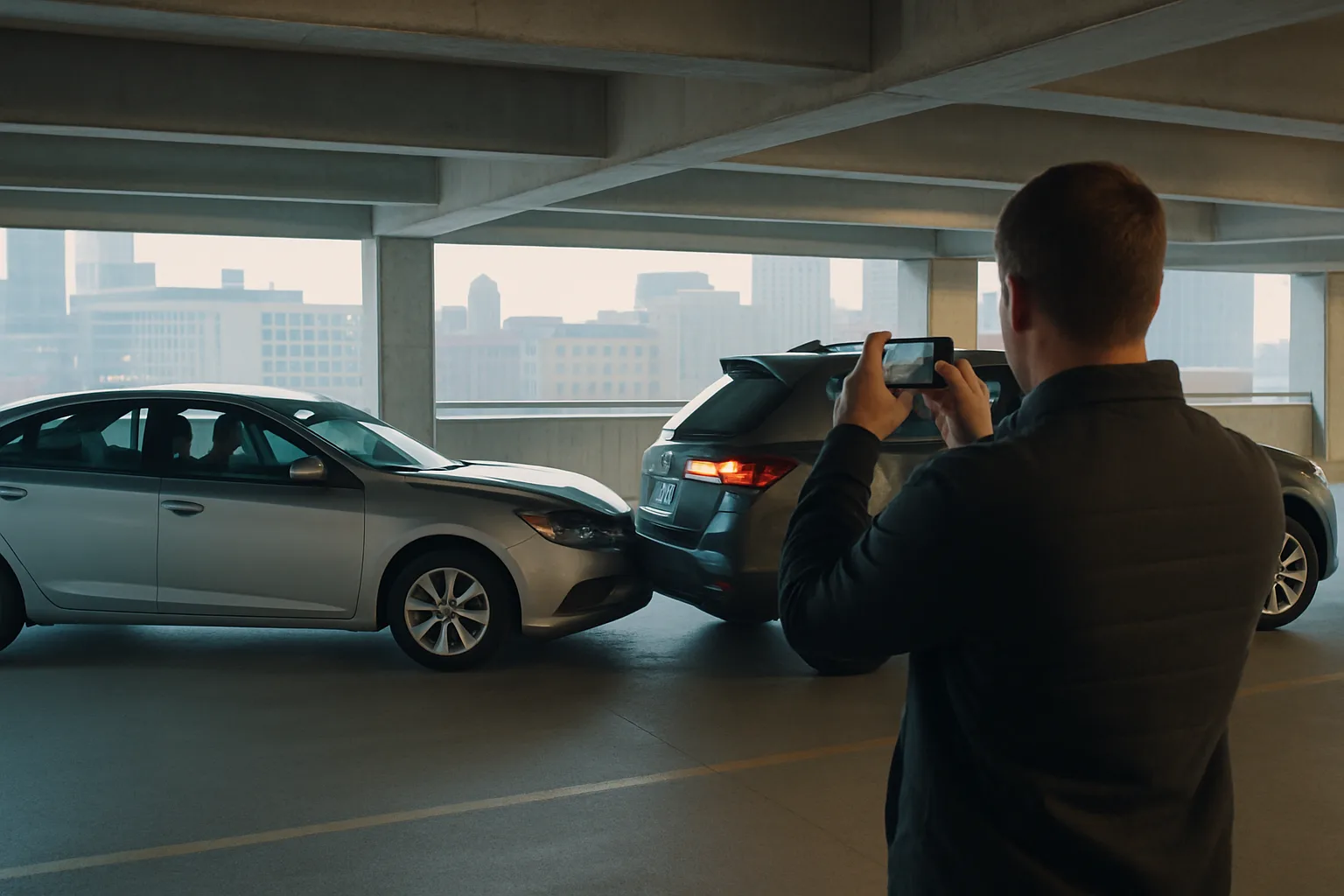
A parking lot may feel like a low-speed, low-risk setting. Yet a collision in a Minneapolis shopping center, parking garage, loading zone, or private drive aisle can cause serious injuries and create difficult questions about fault. Could a parking lot accident lawyer Minneapolis residents contact help evaluate whether a crash supports a personal injury claim? In many cases, the answer depends on the facts, the available insurance, and the evidence preserved after the collision.
Parking lots are different from ordinary streets. Drivers may be turning across several lanes, backing from spaces, watching for pedestrians, or trying to follow signs that are difficult to see. Property conditions, such as blocked sight lines or poor lighting, may also matter. Martin Montilino provides legal information and representation for people evaluating personal injury concerns after vehicle collisions. This article explains what to do after a parking lot crash, what evidence may be important, how Minnesota insurance and fault principles can apply, and when a consultation may be useful.
When Can a Minneapolis Parking Lot Accident Support a Personal Injury Claim?
A parking lot crash may support a claim when another person’s careless or unsafe conduct caused an injury and the injured person can establish the losses connected to that injury. Parking lots are generally private property, but that does not mean drivers are free to ignore reasonable safety practices. Drivers still need to pay attention, control their vehicles, yield when appropriate, and account for pedestrians and surrounding traffic.
Common sources of disputed fault
A frequent question is: who is at fault backing out of a parking space? A driver reversing from a space generally must watch for moving vehicles and pedestrians. However, the moving driver may also have a duty to proceed carefully and avoid entering an obvious path of danger. Fault is not automatically decided solely because one vehicle was backing up.
Other issues may include:
- A driver traveling too quickly for crowded conditions or limited visibility
- Failure to obey a stop sign, directional arrow, or other parking-lot control
- A distracted driver who does not see a pedestrian or another vehicle
- A vehicle that turns across a drive aisle without yielding safely
- Poor lighting, obstructed landscaping, damaged pavement, or confusing signs
Minnesota’s comparative-fault principles may affect how responsibility and compensation are evaluated. The details matter, including each person’s actions, the nature of the injury, and whether a property condition contributed to the event. Laws and procedures can vary by location and may change over time.
What Evidence Matters After a Private-Property Crash in Minneapolis?
Evidence can disappear quickly in a parking lot. Vehicles move, surveillance footage may be overwritten, witnesses leave, and temporary signs or hazards can change. A careful record can help clarify what happened even when the collision did not occur on a public Minneapolis street.
If it is safe to do so, people involved may consider taking the following steps:
- Report the collision. Contact law enforcement or emergency services when someone is injured, a hazard remains, or the circumstances warrant an official response. Also notify the property manager or business office about the incident. Ask how the location preserves incident reports and camera footage.
- Photograph the scene. Capture vehicle positions, damage, lane markings, signs, lighting, pavement, nearby entrances, and the approach of each vehicle. Photograph signs from the driver’s likely viewpoint, not only from a close distance.
- Record sight lines. Take images showing whether parked vehicles, snow, landscaping, pillars, carts, or other objects blocked visibility. If the vehicles have already moved, make a simple diagram and note where each vehicle was before it moved.
- Identify witnesses and cameras. Obtain names and contact information from people who saw the collision or its immediate aftermath. Note businesses, garages, banks, or residences with cameras aimed toward the area, even if you do not know whether the footage captured the event.
- Exchange information carefully. Obtain identifying and insurance information as appropriate. Avoid guessing about fault or making statements about the extent of an injury before the facts are clear.
These steps are not a substitute for legal advice. They are general evidence-preservation considerations for a parking lot car accident in Minnesota. A lawyer may also examine vehicle damage, photographs, incident reports, medical records, insurance communications, and available video.
How Do Insurance, Injuries, and Property Conditions Affect a Claim?
A private property accident claim in Minneapolis may involve more than one insurance question. Minnesota’s no-fault system can provide certain benefits for eligible medical expenses and wage loss after a motor-vehicle accident, subject to applicable requirements and policy terms. A separate liability claim may address losses that are not fully covered by no-fault benefits when another party may be legally responsible.
Potentially relevant parties or coverage sources can include:
- The driver whose conduct may have caused the collision
- The vehicle owner, if different from the driver
- An employer, when the driver was acting within work duties
- A property owner, manager, or business when a dangerous condition contributed
- An insurer providing no-fault or liability coverage
A parking garage injury claim may raise additional questions about lighting, visibility, traffic controls, maintenance, or warnings. A property owner is not automatically liable for every crash on its premises. The evidence must connect a condition or failure to act with the injury, and different legal rules may apply depending on the circumstances.
Medical attention is also important. Some injuries may not be obvious immediately after a collision. A person may wish to describe symptoms accurately to a qualified medical professional and keep records of appointments, restrictions, bills, and other effects on daily activities. Medical care decisions belong with healthcare professionals; legal counsel can help explain how medical documentation may relate to an injury claim.
Common mistakes can make an investigation harder. They include leaving before exchanging information, failing to document a hazard, assuming private property means no report is needed, discarding damaged personal items, or giving a recorded insurance statement without understanding the questions. Depending on the circumstances, an attorney may advise a person about communications, deadlines, available coverage, and preservation of evidence.
Frequently Asked Questions
Do I need to report a parking lot accident in Minneapolis?
Reporting considerations depend on the injuries, damage, safety risks, and circumstances. If anyone may need emergency care or the scene presents a danger, contacting emergency services is important. Even when officers do not investigate a minor private-property collision, people may notify the property manager and their insurers as required by applicable policies. Keeping a written record of when and how the crash was reported can help preserve the timeline.
Can I bring a claim if I was partly responsible for the crash?
Possibly. Minnesota generally evaluates comparative fault rather than assuming that any shared responsibility eliminates every claim. The effect of a person’s percentage of fault depends on the facts and the losses involved. For example, investigators may consider whether one driver was backing, whether another driver was moving too quickly, and whether a visibility problem contributed. A licensed attorney can assess the specific circumstances.
What if a pedestrian was injured in a parking garage?
A pedestrian collision may involve the driver’s conduct, the pedestrian’s actions, traffic controls, visibility, and property conditions. The injured person may have insurance and liability questions that differ from those in a vehicle-only crash. Photographs of entrances, crossings, lighting, pillars, signs, and vehicle paths may be useful. Because injury and insurance issues can be time-sensitive, a consultation may help clarify available options.
Does a parking lot crash affect my Minnesota insurance benefits?
It may. Coverage depends on the policies, the people involved, the vehicle’s use, and the circumstances of the collision. Minnesota no-fault benefits and a possible liability claim serve different purposes, and filing or communicating with an insurer can involve deadlines and documentation requirements. An attorney can review the available policy information and explain general options without assuming that coverage or recovery is guaranteed.
How Martin Montilino Can Help
Martin Montilino is dedicated to helping injured people understand the legal and insurance issues that may follow a parking lot collision. The firm can review how the crash occurred, whether evidence such as video or photographs may still be available, what injuries and losses have been documented, and whether a driver or property condition may have contributed.
The team is committed to fighting for clients’ rights while providing practical information about the claims process. If you were injured in a Minneapolis parking lot, garage, loading area, or private drive aisle, Martin Montilino is ready to evaluate your situation. Contact the firm for a free consultation or case evaluation to discuss your legal options.
The information in this article is for educational purposes only and does not constitute legal advice. Contact a qualified attorney licensed in Minneapolis, mn for advice specific to your situation.