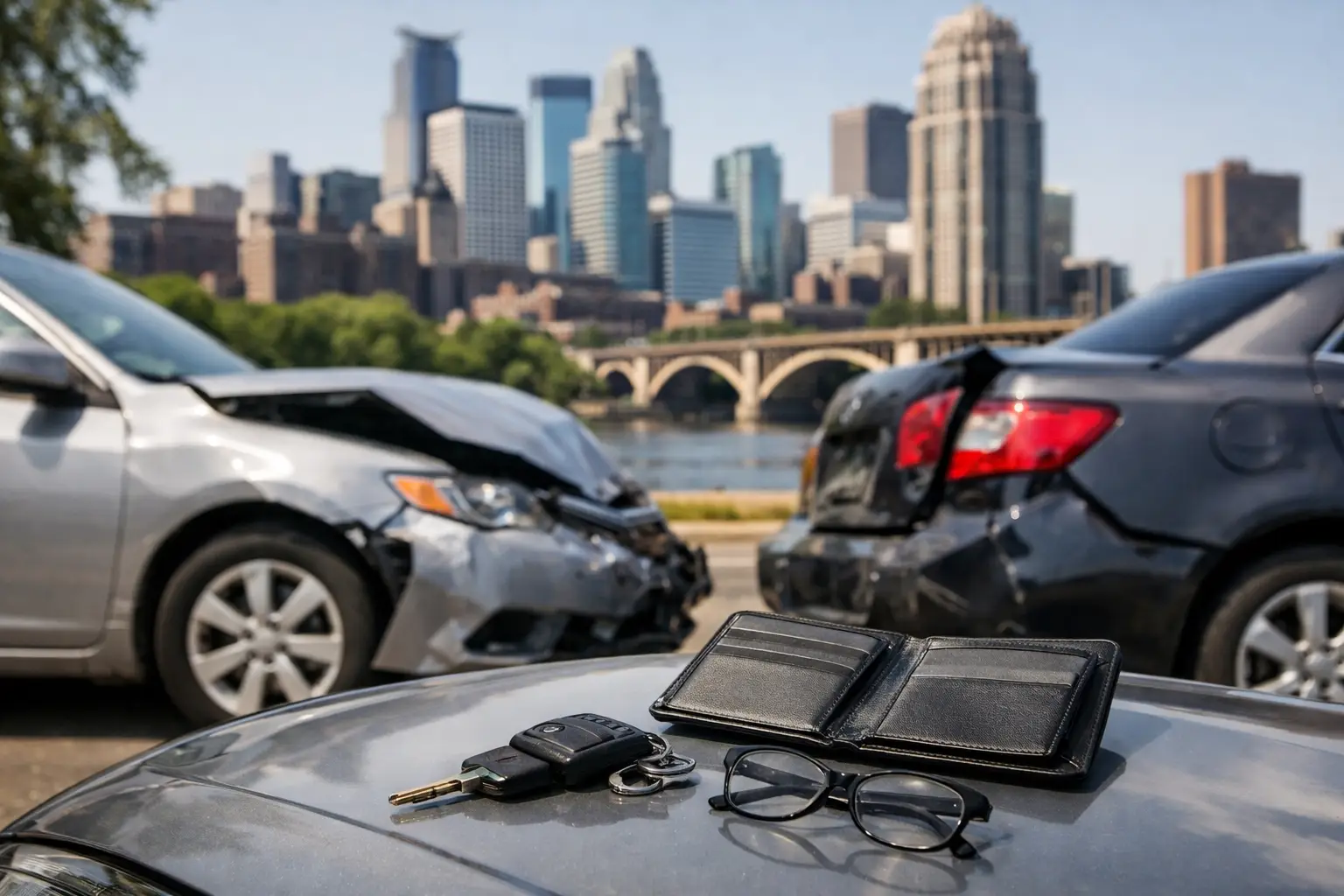
A crash can leave you hurt, unable to work, and staring at medical bills before the other driver’s insurance information has even been confirmed. The question, “what if driver lacks insurance,” has a different answer in Minnesota than it does in many states because Minnesota is a no-fault insurance state. That can provide an important first layer of protection, but it does not eliminate the financial risk of being hit by an uninsured driver.
The right next step depends on the coverage available, the severity of your injuries, who caused the crash, and whether there are other parties who may be legally responsible. Do not assume that an uninsured driver means you have no claim.
Start With Your Own No-Fault Benefits
After most Minnesota motor vehicle accidents, your own auto insurance policy is the first source of coverage for certain losses. These no-fault benefits, also called Personal Injury Protection or PIP benefits, can help pay for medical treatment, wage loss, replacement services, and other qualifying economic losses, regardless of who caused the collision.
Minnesota policies generally provide at least $40,000 in basic no-fault coverage. That amount is commonly divided between medical expenses and non-medical losses such as lost income and replacement services. The actual benefits available and the rules for receiving them depend on your policy and the facts of the case.
No-fault benefits can be especially valuable when the at-fault driver has no insurance. You should seek medical care promptly, follow treatment recommendations, keep records of missed work, and report the crash to your insurer. Insurers may ask for medical documentation, wage verification, or an examination. A request for information is not always improper, but you should be careful about giving statements or signing broad authorizations without understanding how they may affect your claim.
If you do not have your own auto policy, coverage may still be available through a resident relative’s policy, the policy covering the vehicle you occupied, or another source under Minnesota’s no-fault priority rules. These situations can become complicated quickly, particularly when several household members, vehicles, or insurers are involved.
Uninsured Motorist Coverage May Be the Central Claim
Minnesota drivers are required to carry uninsured motorist coverage. This coverage is designed to protect you when an at-fault driver has no liability insurance, cannot be identified after a hit-and-run crash, or has coverage that does not apply to the accident.
Your uninsured motorist claim is made under your own policy, but your insurer does not simply accept every claim at face value. The insurer may dispute fault, challenge whether the other driver was uninsured, question the seriousness of your injuries, or argue that a preexisting condition caused your symptoms. That is why an uninsured motorist claim should be treated as a serious injury claim, not as a routine customer service request.
Uninsured motorist benefits may compensate an injured person for losses that extend beyond basic no-fault benefits, including pain and suffering, disability, emotional distress, and future medical or income-related losses where supported by the evidence. The policy limits matter. Minnesota requires minimum uninsured motorist coverage, but many drivers purchase higher limits. Reviewing every potentially available policy is a necessary early step.
Low Insurance Is Not the Same as No Insurance
Sometimes the driver has insurance, but not enough to cover the harm caused. That is generally an underinsured motorist issue rather than an uninsured motorist issue. The distinction matters because the policies, limits, notice requirements, and settlement procedures may differ.
For example, a driver may carry only the minimum liability coverage while causing a crash that results in surgery, lengthy time off work, or permanent limitations. Their insurer may offer its policy limit, yet that amount may still fall far short of the injured person’s actual losses. Underinsured motorist coverage can be an additional source of recovery in those circumstances.
Before accepting a settlement from the at-fault driver’s insurer, it is wise to determine whether underinsured motorist benefits may be available. An early settlement can create problems if it is handled without the notice or consent required by your own policy.
Can You Sue an Uninsured Driver?
Yes. An uninsured driver who caused the accident can be sued for the damages they caused. But a lawsuit is only one part of the analysis. A judgment is not the same thing as actual recovery.
Many uninsured drivers have few assets, limited income, or debts that make collecting a judgment difficult. Filing suit may still be appropriate where there is evidence of assets, future earning potential, intentional misconduct, or another liable party. It may also be necessary to preserve your rights while insurance issues are being sorted out.
Minnesota law may allow claims against parties beyond the person behind the wheel. Depending on the facts, that can include the vehicle owner, an employer if the driver was working at the time of the crash, a business responsible for a vehicle, or another negligent party. Each case requires a careful review. Liability cannot be assumed simply because someone owns a car or employs a driver.
Minnesota’s No-Fault Rules Do Not Bar Every Injury Claim
No-fault coverage pays certain economic losses, but Minnesota law limits when an injured person can pursue a liability claim for non-economic damages such as pain and suffering. Generally, a person must meet a legal injury threshold. That threshold may involve medical expenses above a statutory amount, permanent injury or disfigurement, disability lasting more than 60 days, or death.
Whether you meet a threshold is not always obvious in the first weeks after a crash. Some injuries improve with conservative care. Others reveal their full impact only after imaging, specialist care, rehabilitation, or time away from work. Back injuries, neck injuries, traumatic brain injuries, and nerve-related symptoms often require a thorough medical record before their long-term consequences can be evaluated fairly.
Do not let an insurer pressure you into deciding your case’s value before your medical condition is clear. At the same time, waiting too long to protect your legal rights can be costly. Deadlines apply to insurance claims and lawsuits, and the right deadline depends on the type of claim and policy involved.
What to Do After Learning the Driver Is Uninsured
First, obtain the police report and preserve every piece of information you have about the collision. Names, witness contacts, vehicle details, photographs, video, and scene evidence can become critical if the other driver later disputes fault or denies being involved.
Next, notify your own insurer that you may have a no-fault and uninsured motorist claim. Give timely notice, but keep your communication factual. You do not need to speculate about fault, your diagnosis, or your future ability to work while treatment is ongoing.
Continue medical care and document how the injury affects daily life. Save bills, prescriptions, mileage records, wage-loss information, and notes about tasks you can no longer perform without help. These records help establish the real impact of the crash beyond the first emergency room visit.
Finally, get a clear assessment of all available coverage before agreeing to a settlement. An experienced personal injury attorney can examine the crash report, policies, medical evidence, and potential defendants to identify the strongest path forward. The Law Office of Martin T. Montilino provides free case evaluations for injured people in Minneapolis and the Twin Cities who need direct, honest guidance after a serious accident.
An uninsured driver creates uncertainty, but it should not force you to carry the financial burden alone. Protect your health, preserve the evidence, and make sure every available source of compensation is evaluated before you make a decision that cannot be undone.