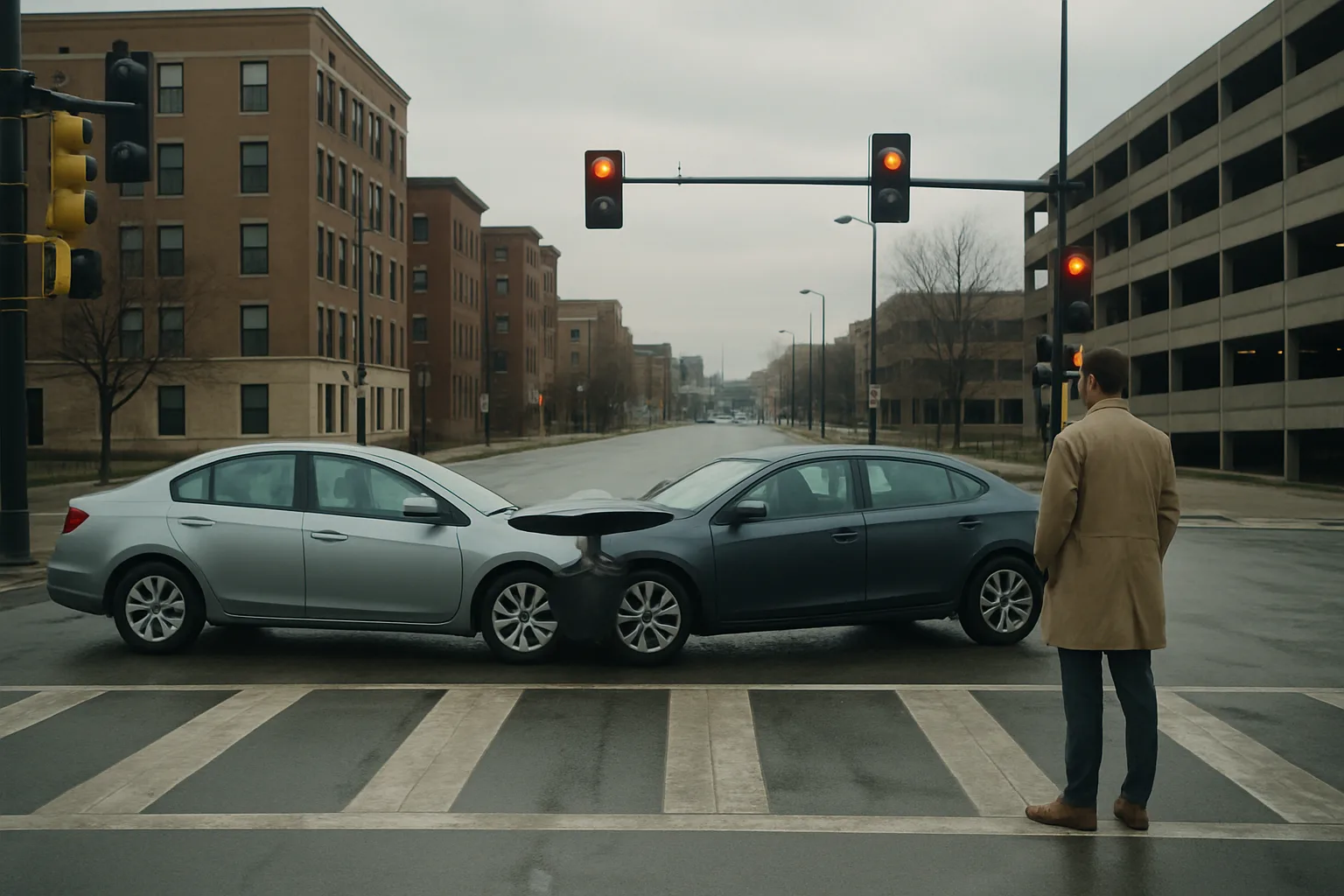
An intersection crash can leave two drivers with completely different memories: one says the light was green, while the other says the turn began only after the signal changed. If the scene is cleared before photographs, witness information, and video are preserved, important details may become harder to verify. That is why understanding Minneapolis intersection accident evidence matters from the beginning.
Evidence may help show who entered the intersection first, which signal was displayed, whether a driver was turning, and whether visibility or a sudden maneuver affected the collision. After explaining those issues, help from Minneapolis car accident lawyers may be useful when evidence needs to be preserved, organized, or presented to an insurer.
Martin Montilino provides legal guidance for people evaluating their options after a crash. This article covers the main evidence to preserve, how fault may be evaluated under Minnesota law, and common mistakes that can weaken an investigation.
Minneapolis Intersection Accident Evidence: Start With the Scene
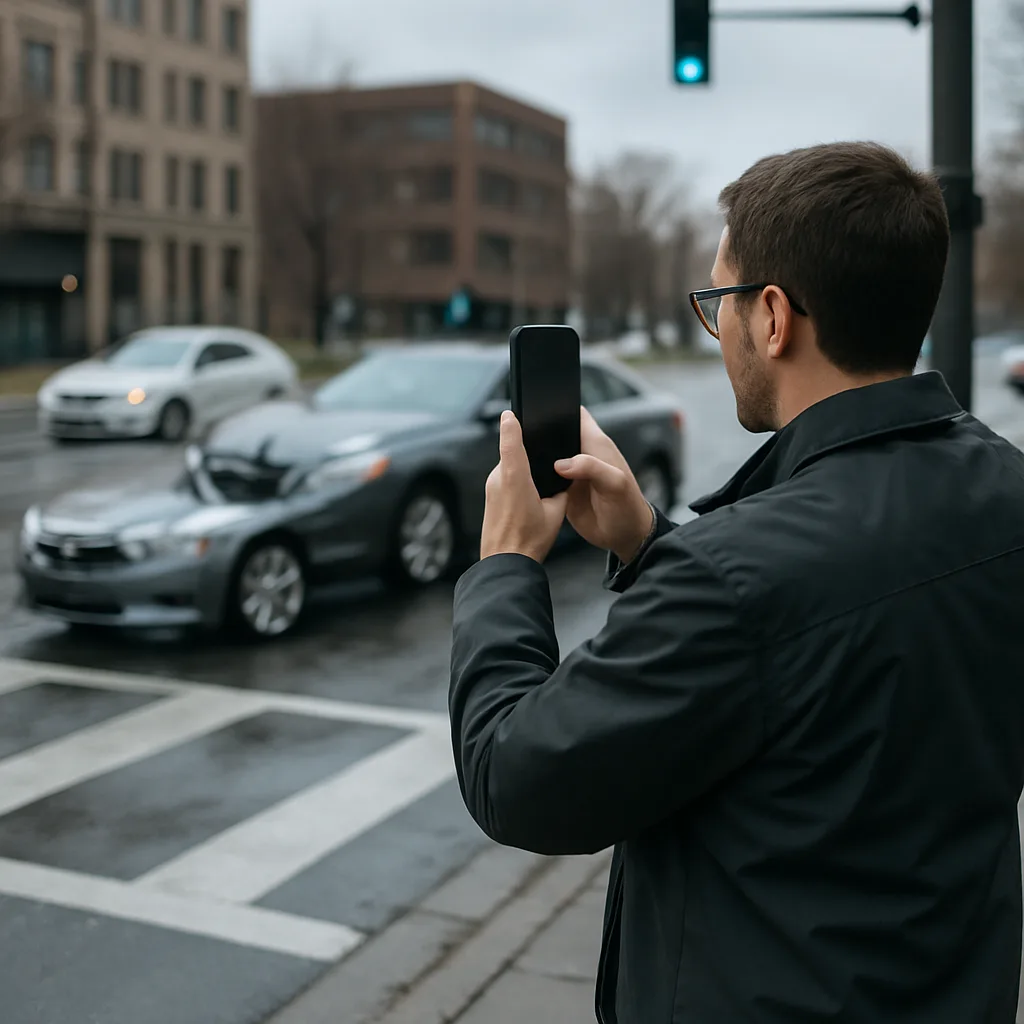
The scene often contains the clearest record of how an intersection collision occurred. Photographs should capture more than vehicle damage. When it is safe to do so, broad images can show lane markings, stop lines, crosswalks, traffic signals, sight lines, construction, parked vehicles, weather, and objects that may have blocked visibility.
Photograph positions, damage, and sight lines
Take photographs from several directions rather than only close-ups. Useful images may include:
- The final position of each vehicle before it is moved, if safe and permitted.
- The point of impact and damage on each vehicle.
- Skid marks, debris, fluid, tire marks, and damaged traffic equipment.
- The driver’s approach lane, turn lane, stop line, and likely path through the intersection.
- Lighting, weather, glare, snow, or temporary obstructions affecting visibility.
Vehicle positions can help test whether a driver was proceeding straight, turning left or right, changing lanes, or entering from a different approach. Photographs do not prove fault by themselves, but they can be compared with damage patterns, measurements, witness accounts, and the police report.
Preserve signal and timing details
Record the intersection, direction of travel, lane, and signal shown to each driver as soon as possible. A person’s memory may be useful, but it can change after a stressful event. If signal timing is disputed, information may potentially be sought from the City of Minneapolis or another agency responsible for the roadway. Signal phases, pedestrian intervals, and any available maintenance or timing records may help reconstruct what happened. Availability and retention periods vary, so an attorney may advise on appropriate preservation requests.
How Fault Is Evaluated in a Minneapolis Intersection Crash
Minnesota intersection disputes commonly involve right-of-way rules, turning movements, traffic-control signals, and competing versions of the same event. A green light does not automatically resolve every question. Investigators may still examine whether a driver turned across oncoming traffic, failed to yield while changing lanes, entered after the signal changed, or had enough visibility to respond safely.
In a contested claim, the relevant question is usually how the available evidence fits together. The point of impact, vehicle damage, debris field, lane paths, braking, and timing may support or undermine either driver’s account. How Minnesota fault disputes depend on the crash facts explains the broader principle that an initial assumption about fault may change when the evidence shows a different sequence.
Important sources may include:
- Traffic-signal evidence: Signal phase information, intersection design, pedestrian-signal timing, and observations from people who saw the light may help address a red-light or green-light dispute.
- Turning and right-of-way evidence: A left-turning vehicle’s position, an opposing vehicle’s speed and path, lane markings, and damage locations may be relevant to a turning collision.
- Witness information: Obtain names and reliable contact details, along with a brief account of what each person observed. Avoid coaching witnesses or asking them to adopt a particular conclusion.
- Official records: A Minneapolis Police Department crash report, photographs, diagrams, citations, and available roadway records may provide useful leads, although no single record necessarily decides civil liability.
- Video and electronic evidence: Dashcam footage, nearby business cameras, vehicle data, and phone recordings may show signal changes, speed, movement, or the moments before impact.
Minnesota’s comparative-fault rules can affect a civil claim when more than one person’s conduct contributed to an injury. The exact analysis depends on the facts and the applicable Minnesota law, which may change over time. A case filed in Hennepin County may involve different practical issues from an insurance investigation, so location and procedure matter.
Preserving Evidence and Avoiding Common Intersection-Claim Mistakes
Video is often overwritten, and physical evidence can disappear when vehicles are repaired or moved. Prompt preservation is therefore important. Ask nearby businesses, parking facilities, transit-related properties, or residential buildings whether cameras may have captured the approach or collision. Do not assume a camera points toward the roadway or stores footage for a long period; an attorney may help identify potential custodians and make a focused preservation request.
Other useful steps generally include:
- Keep original dashcam files and make backup copies without editing the original.
- Save photographs in their original format and note when and where they were taken.
- Write down the sequence while memories are fresh, including signal color, lane, turn, speed estimate, and impact location.
- Keep repair estimates, towing records, medical records, wage documentation, and communications with insurers in an organized file.
- Avoid posting crash theories or edited video publicly before understanding how they may be interpreted.
- Be careful with recorded statements or broad releases; depending on the circumstances, an attorney may advise how to respond to an insurer.
Liability evidence and first-party benefits are separate issues. Minnesota no-fault coverage may provide benefits for eligible accident-related medical expenses and certain lost income regardless of who caused the crash, subject to policy terms and legal requirements. See information about Minnesota no-fault benefits for medical bills and lost wages while the fault investigation continues.
A consultation may be especially useful when accounts conflict, a traffic signal is central to the dispute, video may be at risk of deletion, or injuries and expenses are significant. Readers can review a free injury consultation about the intersection crash to understand what information may be helpful for an initial discussion.
Frequently Asked Questions
Does a police report prove who caused a Minneapolis intersection accident?
A police report can be an important source of information, particularly if it includes a diagram, witness accounts, measurements, or an officer’s observations. However, it is not necessarily the only evidence considered in a civil insurance claim or lawsuit. Video, photographs, vehicle damage, signal information, and testimony may support or contradict portions of the report. The effect of a report depends on its contents and the circumstances of the crash.
Can dashcam footage establish fault in a traffic-light accident?
Dashcam footage may provide direct evidence of vehicle movement, signal timing, lane position, and the moments before impact. Its usefulness depends on image quality, camera angle, time and date accuracy, and whether the file is complete and authentic. Preserve the original file and avoid editing it. Even clear footage may not answer every issue, such as speed, visibility, or whether another driver had a legal duty to yield.
What if no witness saw the traffic signal?
A claim does not necessarily fail because no witness saw the light. Investigators may compare vehicle positions, impact damage, debris, braking, lane markings, signal cycles, video, and each driver’s account. Witnesses who observed the vehicles’ movements may still be helpful even if they did not see the signal itself. The strength of the evidence depends on how consistently these sources describe the collision sequence.
Can poor visibility affect fault in a Minneapolis intersection collision?
Visibility can be relevant when darkness, glare, snow, heavy rain, parked vehicles, construction, vegetation, or roadway design affected what a driver could see. Photographs should document these conditions as close to the crash time as possible, because conditions can change. Visibility does not automatically excuse a driver’s conduct. Minnesota law and the specific facts determine how the issue may affect fault and any potential claim.
How Martin Montilino Can Help
Martin Montilino is dedicated to helping injured people understand the evidence and legal issues that may affect an intersection crash. The firm can evaluate available photographs, signal details, witness information, vehicle positions, dashcam footage, business video, insurance communications, and injury-related documentation. Depending on the circumstances, this review may help identify missing evidence and clarify potential options under Minnesota law.
If you are dealing with a disputed Minneapolis intersection collision, contact Martin Montilino for a free consultation or case evaluation. The firm is committed to fighting for your rights while treating your situation with care and personal attention.
The information in this article is for educational purposes only and does not constitute legal advice. Contact a qualified attorney licensed in Minneapolis, mn for advice specific to your situation.